When your child has a cavity, you probably expect the dentist to fix it with a simple filling. In many cases, that is exactly what happens. But sometimes, the cavity is so large that a filling may not be strong enough.
When parents hear that their child might need something more than a filling, they often feel worried or confused. Is it really necessary for a baby tooth? Will it last? Is it safe?
The answer depends on how much damage the tooth has. In certain situations, choosing a dental crown instead of a large filling can protect your child’s tooth better and prevent future problems. Understanding why can help you make a confident decision.
What Happens When a Cavity Becomes Too Large?
Cavities often start small but can grow quickly if not treated early. Bacteria in the mouth create acids that slowly break down enamel, the hard outer layer of the tooth.
Once enamel is damaged, decay can spread deeper and weaken the tooth from inside. As the cavity becomes larger, the tooth loses strength, and the walls may become thin.
Chewing surfaces can weaken, making the tooth more likely to crack or break. In such cases, a dental crown in Methuen may be recommended to protect and restore the tooth’s shape, strength, and proper function.
Why Baby Teeth Still Matter
Some parents think baby teeth are temporary, so they are not as important as adult teeth. This is a common misunderstanding.
Baby teeth play a big role in your child’s health. They help children chew food properly, which supports good nutrition. They also help with speech development. Most importantly, baby teeth hold space for adult teeth.
If a baby tooth is lost too early, nearby teeth can move into that space. This may lead to crowding or alignment problems later. Protecting baby teeth until they fall out naturally helps support healthy development and may reduce the need for future orthodontic treatment.
The Limits of Large Fillings
Fillings work very well for small and medium cavities. The dentist removes the decay and fills the empty space with a strong material. This restores the tooth’s shape and function.
However, when a cavity is very large, there may not be enough healthy teeth left to support a filling. A large filling depends on the remaining tooth structure to hold it in place. If the tooth walls are thin or weak, the filling may crack or fall out over time.
When a large filling fails, your child may need more treatment. Sometimes, each repair removes more natural tooth structure, making the tooth even weaker. In some cases, the tooth may eventually need to be removed if it cannot be saved.
How a Dental Crown Protects a Child’s Tooth
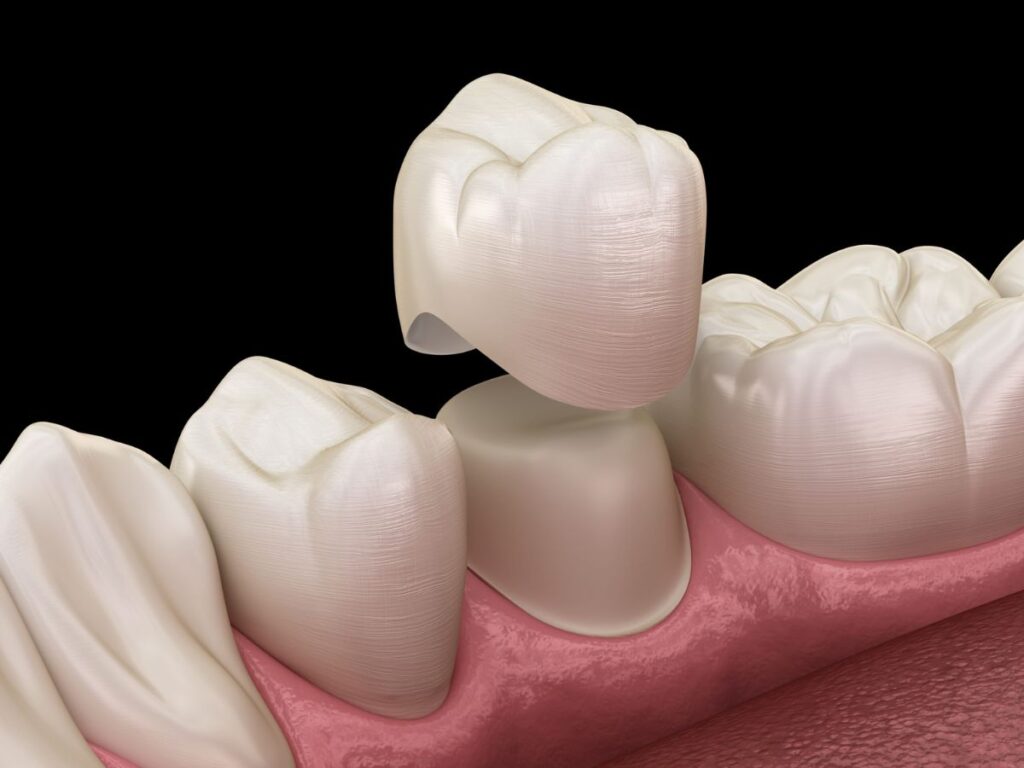
When a tooth has lost a lot of structure, a dental crown may be the better option. Instead of filling only one part of the tooth, this restoration covers the entire visible portion.
This full coverage gives the tooth strong support from all sides.
Full Coverage Protection
A crown acts like a protective cap. It fits over the damaged tooth and protects it from further decay and breakage. Because it covers the whole tooth, it does not rely on thin walls for support.
This design helps shield the tooth during chewing and biting. Children often eat crunchy snacks, chew on tough foods, or grind their teeth at night. A fully covered tooth is less likely to crack under pressure.
Strength for Chewing and Daily Use
Kids are active and energetic. They may not always be careful while eating. A weakened tooth with a large filling may not handle daily stress very well.
A dental crown spreads chewing forces evenly across the tooth. This reduces pressure on any one area. As a result, the tooth becomes stronger and more stable.
In many cases, a crowned baby tooth can last until it is naturally ready to fall out. This helps avoid emergency visits and unexpected pain.
Comparing Large Fillings and Crowns
When deciding between a large filling and a crown, it helps to look at how each option performs over time.
Durability Over Time
Large fillings are more likely to fail when they replace a big portion of the tooth. They may wear down, chip, or loosen over time. If that happens, bacteria can enter again and cause new decay.
In some cases, children who are already receiving orthodontics in Methuen may also need extra protection for weakened teeth to support long-term oral health. Crowns tend to last longer in severely damaged teeth because they protect the entire structure.
They lower the chance of new decay forming in weak areas. For children with extensive decay, stronger protection often leads to fewer future problems and better overall dental stability.
Risk of Breakage and Re-Treatment
If your child has needed pulp therapy, sometimes called a baby root canal, the tooth becomes more fragile after treatment. The inner infected tissue is removed, which leaves the tooth weaker.
Placing only a large filling after pulp therapy may increase the risk of the tooth breaking. If the tooth fractures, your child may feel pain or develop infection.
Covering the tooth fully can reduce this risk and help maintain stability until the baby tooth falls out on its own.
Situations Where a Crown Is the Better Choice
Dentists often recommend crowns in specific situations where strength and protection are especially important.
After a Pulp Treatment
When decay reaches the pulp, the tooth requires more than a simple filling. After the infected tissue is removed, the tooth structure may not be strong enough to handle chewing forces alone.
A full-coverage restoration gives added support. Without it, the treated tooth may not last long.
For Children With High Cavity Risk
Some children develop cavities more easily than others. This may be due to diet, brushing habits, enamel strength, or medical conditions.
If a child already has several large cavities, choosing a stronger restoration may help prevent repeated treatment. A crown seals and protects the damaged tooth more effectively in high-risk cases.
At Happy Hoppers Pediatric Dentistry and Braces, each child’s dental history and risk level are carefully reviewed before making treatment decisions. The focus is always on protecting the child’s long-term oral health.
Comfort, Appearance, and Confidence
Parents sometimes worry about how crowns will look or feel. They may imagine something uncomfortable or very noticeable. Modern pediatric dentistry offers safe and practical options for children.
Modern Materials
For back baby teeth, stainless steel crowns are often used because they are strong and dependable. Since these teeth are not easily visible when smiling, appearance is usually not a concern.
For front teeth, tooth-colored crowns can be placed. These blend better with natural teeth and help maintain a natural look.
Most children adjust quickly. After a short time, they usually forget the dental crown is even there.
Helping Kids Feel Good About Their Smile
A badly decayed tooth can cause discomfort and make children feel self-conscious. They may avoid smiling or chewing on one side of their mouth.
Restoring the tooth properly allows children to eat comfortably and smile confidently. Removing pain and restoring function can improve daily life in simple but important ways.
What Parents in Methuen Should Know
If you live in Methuen, it is helpful to know that pediatric crowns are a common and trusted treatment option.
They are often recommended for baby teeth that are too damaged for large fillings. Choosing stronger protection early may prevent more complicated problems later.
Preventing Future Dental Problems
A weak tooth with only a large filling can crack or become infected. If a baby tooth is lost too early, nearby teeth may shift.
This can create spacing issues that require additional dental work. Protecting the tooth properly the first time can lower the risk of future complications.
Long-Term Oral Health Planning
Healthy baby teeth support the proper eruption of adult teeth. Keeping them stable and strong helps guide adult teeth into the correct position.
Planning for long-term oral health means thinking beyond the current cavity. It involves protecting the child’s smile for the future.
Families in Methuen who address dental issues early often see better results over time. Talking openly with your child’s dentist about treatment options can make the decision easier.
Conclusion
When a cavity is small, a filling is usually enough. But when a tooth has lost a large amount of structure, stronger protection may be the better choice.
Full coverage helps reduce the risk of breakage, infection, and repeated treatment. It supports chewing, speech, and proper spacing for adult teeth. If you are unsure which option is right for your child, a professional evaluation can provide clear guidance.
At Happy Hoppers Pediatric Dentistry and Braces, families receive honest advice and thoughtful care to help protect growing smiles and support healthy development for years to come.
Source Urls: