Baby teeth change faster than many parents expect. One month a child’s smile looks straight and neat, and the next month the same teeth may begin to tilt, twist, or shift in surprising ways.
These changes often make parents wonder if crooked baby teeth mean their child will have alignment problems later in life.
The truth is that early crookedness can sometimes signal future concerns, but it does not always guarantee that treatment will be needed.
As your child grows, their smile goes through natural stages, and this is where orthodontics becomes especially helpful in understanding what is normal and what may need attention.
By knowing how baby teeth grow, fall out, and create space for adult teeth, parents can support healthy development and feel more confident with each stage of their child’s smile.
What Crooked Baby Teeth Really Mean
Why Baby Teeth Look Crooked in the First Place
There are several natural reasons why baby teeth may appear crooked. A young child’s jaw is still small and developing, so the space available for the teeth is limited. This sometimes makes the teeth look crowded even though it is a normal stage in growth.
As the jaw becomes larger, the teeth often shift and settle into a new position, which is something parents often ask about when learning more about orthodontics in Methuen MA and how smiles change over time.Everyday habits can also affect how baby teeth look.
Children often chew on toys, place fingers in their mouths, or shift their biting patterns as they grow. These habits can temporarily make the teeth appear slanted or uneven without causing any lasting harm.
Some children also have teeth that erupt slightly rotated because the gum tissue or surrounding space guides them in a different direction. These changes may look unusual but are part of typical childhood development.
When Early Crookedness Is Normal
Many children go through a stage where their baby teeth seem out of place. This often happens right before permanent teeth begin to erupt. As baby teeth loosen, they may tilt, turn, or shift forward.
Because these changes are part of the natural process of shedding old teeth, they do not always indicate future alignment concerns.
Dentists refer to this as a transitional phase. During this time, the child’s smile can look uneven or irregular, yet these shifts often correct themselves as permanent teeth come in. This is why early crookedness alone does not determine whether a child will need future treatment.
Can Crooked Baby Teeth Predict Future Orthodontic Problems?
Crooked baby teeth can sometimes point to future concerns, but the degree of risk depends on several factors that dentists evaluate during routine dental visits.
Factors That Increase the Chance of Trouble Later
Genetics plays one of the biggest roles. If parents or older siblings needed braces, the likelihood of alignment issues may be higher for the child.
The shape of the jaw, the size of the teeth, and inherited patterns of growth often influence how both baby and permanent teeth align.Habits can also affect long-term development.
Thumb-sucking, prolonged pacifier use, tongue thrusting, and mouth breathing place pressure on the developing jaw. Over time, these habits may cause shifting, narrowing of the upper arch, or changes in how the bite closes.
When these patterns continue, children may eventually need treatments such as braces in Methuen MA to guide the teeth and jaw back into proper alignment as they grow.
Early crowding is another sign dentists watch closely. When the baby teeth sit too close together, the larger permanent teeth can face even greater challenges finding space.
Families in Methuen often notice early crowding in the bottom front teeth, which can be an early sign that guidance may be needed later in childhood.
Early Warning Signs Dentists Look For
During checkups, dentists examine patterns that might show whether crookedness will continue into the permanent stage. Conditions such as crossbites, deep bites, and underbites often begin forming while baby teeth are still present.
These issues relate not only to the teeth but also to jaw development, which is why monitoring early is so helpful.Spacing problems can also be signs to watch.
Some spacing is healthy and allows adult teeth to erupt properly. Too much spacing or unusual gaps may indicate habits or growth patterns that could affect the future smile.
Jaw growth delays, uneven eruption, or tilting of several teeth in the same direction can also signal a need for early guidance.
When dentists discuss future needs, they may refer to orthodontics, which helps guide teeth and jaw development over time.
This does not mean immediate treatment is required. Instead, it helps parents understand that certain patterns may change as the child grows, and early checks can make a big difference later.
How Early Dental Visits Help Parents Understand Their Child’s Growth
What Happens During an Orthodontic Check for Children
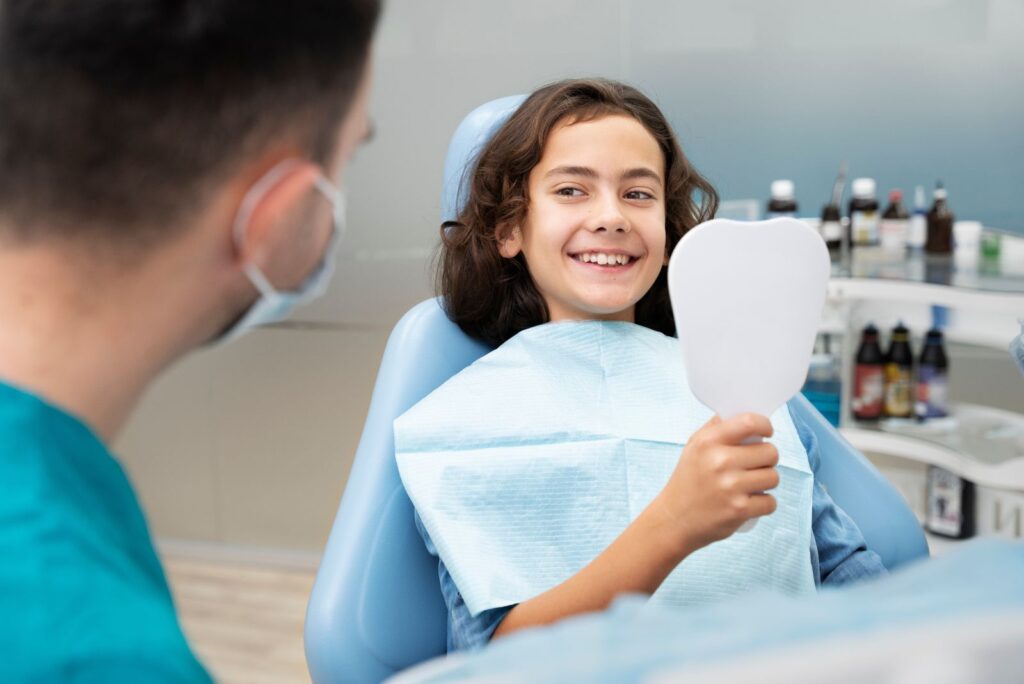
An orthodontic check for a child is simple and comfortable. The dentist looks at how the teeth line up, how the jaws open and close, and how much space exists for future teeth.
X-rays may be taken to see permanent teeth still forming under the gums, allowing the dentist to predict how they may grow in.
The dentist studies the overall picture, including jaw shape, spacing, bite position, and any habits that may affect development.
This makes it easier to understand whether the crooked baby teeth are a temporary stage or a sign that the child may benefit from guidance as they grow.
Why Early Checks Make a Difference
Early evaluations can make future care simpler. When dentists identify concerns early, they can guide the growth of the jaw while it is still flexible and easier to influence.
This may prevent more serious concerns from forming or reduce the need for longer treatment later in life.
For example, a narrow upper jaw can often be widened more easily during childhood. This helps create room for permanent teeth and lowers the risk of future crowding.
Visiting the dentist regularly also allows parents to get clear updates and ask questions about what changes to expect. In many cases, early guidance can reduce the need for complex intervention once permanent teeth come in.
Real-Life Scenarios: When Crooked Baby Teeth Matter
Example: Early Crowding
A child may show crowding in the lower front teeth as soon as these teeth grow in. These teeth might twist or overlap even when they are small. This early pattern often continues when the larger permanent teeth erupt.
If the jaw does not grow wide enough, the new teeth may not have the room they need. Monitoring this early helps dentists decide if steps should be taken to guide the jaw or create additional space.
Example: Spacing Problems
Some children have wide spaces in their baby teeth. While this can look unusual, it may actually help the permanent teeth erupt more comfortably.
However, very large gaps or uneven spacing between the front teeth may connect to habits such as tongue thrusting. Understanding whether the spacing is helpful or harmful requires professional evaluation.
Example: Jaw Growth Concerns
Crooked baby teeth can sometimes show that the jaw is developing unevenly. For instance, if the upper baby teeth tilt inward, this may indicate that the upper jaw is narrower than normal.
Families in Methuen sometimes notice these changes early, and their dentist may recommend an evaluation.
Early help can make future changes easier, and clinics such as Happy Hoppers Dental Methuen often guide parents through simple steps that support healthy development.
What Parents Can Do at Home
Healthy Habits That Support Straight Teeth
Parents can help their child develop a strong and healthy smile through daily habits. Good brushing and flossing support healthy gums, which help teeth stay in the right place.
Healthy snacks like apples, carrots, and crunchy vegetables help strengthen the jaw as a child grows.Managing habits is important as well.
Thumb-sucking or long-term pacifier use can push the teeth forward over time. Helping children stop these habits early supports better alignment.
If a child breathes through their mouth frequently, it should be discussed with the dentist. Mouth breathing can influence how the jaw grows and may lead to long-term issues if not addressed early.
When to Ask for a Professional Opinion
Parents should consider getting a professional opinion if the child’s baby teeth look very crowded, twist noticeably, or erupt in unusual directions.
Delayed eruption of permanent teeth, difficulty chewing, or visible shifts in jaw position are also reasons to ask for guidance. These signs do not guarantee a problem, but early checks often help families plan and feel more confident about the next steps.
A dentist may recommend an evaluation related to orthodontics if the patterns appear likely to affect the adult teeth. This guidance helps catch issues early while the jaw is still developing and easier to direct.
Conclusion
Crooked baby teeth may sometimes signal future alignment concerns, but they are not always a sign that a child will require treatment later. Many changes are normal and happen as the jaw grows and permanent teeth begin to appear.
Regular dental visits, good habits at home, and early guidance when needed all help support healthy development.
If you ever have questions or want reassurance about your child’s smile, the team at Happy Hoppers Dental Methuen is always ready to help your family feel confident and informed.
Sources: